

Travel Between Lisbon Landmarks Without Lost Time

The view from São Jorge Castle is unforgettable, but getting from its steep lanes to Belém Tower can take far longer than most visitors expect. To travel between Lisbon landmarks well, think in neighborhoods rather than pins on a map. Lisbon is compact in size, yet its hills, cobblestones, tram queues, and riverfront distances can turn a short-looking route into a tiring afternoon.
The good news is that the city offers several easy ways to get around. The right choice depends on your time, mobility, group size, and whether you want the journey to be part of the experience. With a little local planning, you can see the major sights, find hidden gems between them, and still have time for a proper pastel de nata.
Travel Between Lisbon Landmarks by Area
Lisbon's headline attractions are not all in one walkable zone. Baixa, Chiado, Alfama, Belém, and Parque das Nações each have a different character and practical rhythm. Trying to cross the city on foot simply because the map says it is only a few miles away often means climbing more than you planned.
The historic center is best treated as one connected sightseeing area. Praça do Comércio, Rua Augusta, Rossio Square, Elevador de Santa Justa, Chiado, and Bairro Alto can fit naturally into one day or half day. You can walk much of this section, although the climb from Baixa toward Chiado and Bairro Alto is real. Use the elevators, funiculars, or a short ride when your feet need a break.
Alfama and Graça sit uphill to the east of the center. They are full of Lisbon's most memorable viewpoints, tiled facades, Fado corners, and narrow lanes, but they are not designed for fast navigation. São Jorge Castle, Lisbon Cathedral, Portas do Sol, and Miradouro da Senhora do Monte belong together. Plan time to stop rather than race through them.
Belém is the outlier. It is west of the center along the Tagus River and deserves its own block of time. Jerónimos Monastery, Belém Tower, the Monument to the Discoveries, MAAT, and the famous pastry shops are spread along the waterfront. It is a beautiful area to explore, but walking there from central Lisbon is usually not the best use of a sightseeing day.
Pick Transportation That Matches Your Day
Walking is best for the details
Walk when the landmarks are close and the route itself has something to offer. Baixa to Chiado, or Lisbon Cathedral to Portas do Sol, rewards a slower pace. You will notice tiny shops, lookout points, street art, and details that disappear behind a vehicle window.
Walking is less appealing when you are crossing from Alfama to Belém, traveling with young children, managing luggage, or visiting during the heat of summer. Lisbon's polished stone sidewalks can also be slippery after rain, so comfortable shoes matter more here than in many European capitals.
Historic trams are charming, but not always quick
Tram 28 is iconic for a reason. It rolls through some of the city's oldest neighborhoods and offers a memorable introduction to Lisbon's hills. It can be a fun ride between parts of Baixa, Graça, and Alfama, especially if you board early in the morning.
However, it is public transportation, not a sightseeing service with a schedule built around your plans. Lines can be long, cars can be crowded, and stops may not put you directly at every landmark. Take it for the experience if you have time, but do not build a tightly timed day around it.
Metro and regular transit work for longer hops
The metro is clean, affordable, and useful for reaching places outside the old center, including Parque das Nações and airport-area hotels. It is not the most direct option for the hilltop landmarks that make Lisbon famous, because many of those streets lie beyond a comfortable station walk.
For Belém, trains and buses can be practical from Cais do Sodré or central transit points. This is a good option for independent travelers who are comfortable reading routes and allowing extra time. If you want maximum flexibility for photo stops or are traveling as a family, a direct private ride may be more relaxing.
Taxis and ride services are useful, with limits
A taxi or ride service can save energy after a long museum visit or take you from one district to another without waiting for transit. They are particularly handy late at night, in bad weather, or when a group needs a simple point-to-point trip.
The trade-off is that drivers follow the road, not a sightseeing route. Lisbon traffic can slow down busy routes, and a car cannot easily pause on the city's narrowest streets or deliver the local stories behind the places you pass. It gets you there, but it may miss the best parts in between.
A private tuk tuk makes the hills feel easy
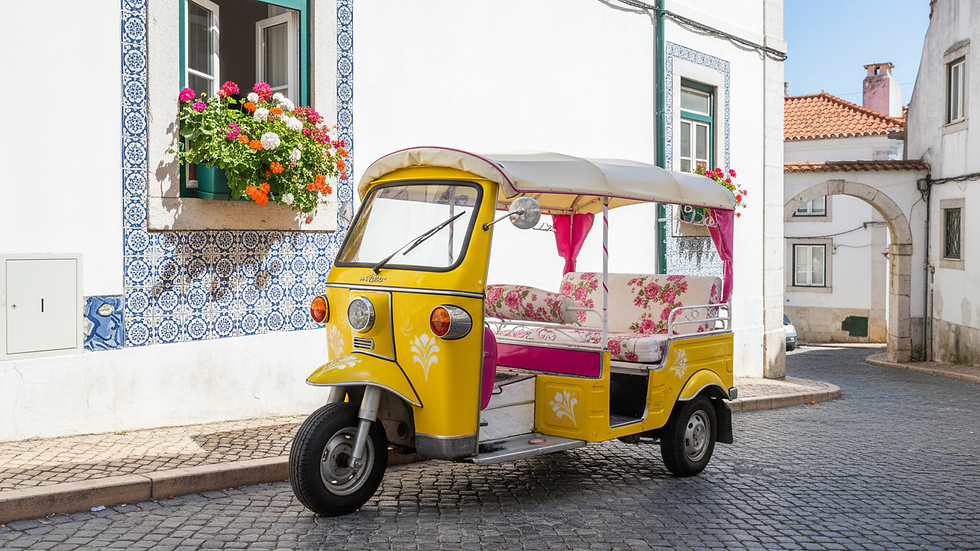
For visitors who want to cover more ground without giving up the atmosphere, a private tuk tuk is one of the most enjoyable ways to move through central Lisbon. Its compact size suits the old neighborhoods, while its open design keeps the city close. You can move from a viewpoint in Graça to Lisbon Cathedral, a hidden Alfama lane, and the city center without treating every climb as a workout.
A guided ride works especially well for couples, families, and groups with mixed interests or limited time. With room for up to six guests on many private experiences, you can keep the pace personal: pause for photos, linger at a favorite view, or skip a stop that does not interest your group. A local guide can also shape the route around road access, crowds, and the stories that turn a monument into a memory.
Tuk Tuk Tour Lisbon offers this style of private sightseeing for travelers who would rather spend their energy enjoying the city than decoding its hills. For international and mixed-language groups, a multilingual audio guide can add another layer of comfort, so everyone can follow the history of each district in the language they understand best.
A Smart Route for Lisbon's Biggest Highlights
A good full-day plan usually combines the historic hills with Belém, rather than attempting every famous place in a random order. Start early in Alfama or Graça, when the viewpoints are cooler and quieter. Visit São Jorge Castle if it is a priority, then pass Lisbon Cathedral and descend toward Praça do Comércio for coffee or a riverside break.
From there, head west to Belém. Give yourself enough time for Jerónimos Monastery and the waterfront monuments rather than rushing through the area for a single photo. The distance between the monastery and Belém Tower is walkable along the river, but it still takes time, particularly if you stop at the Monument to the Discoveries or MAAT.
Return to Chiado or Bairro Alto in the late afternoon. The light is lovely, restaurants are coming alive, and viewpoints such as Santa Catarina offer an easy finish to a day of sightseeing. This order reduces backtracking and gives each neighborhood the attention it deserves.
If you only have a few hours, do not try to add Belém to an Alfama and downtown route. Choose one side of the city and enjoy it properly. A half day in the old center can feel rich and complete; a rushed half day scattered across Lisbon can feel like time spent in traffic.
Time Your Landmark Visits Around Crowds
The best transport plan still needs realistic timing. Major sites can have security lines, ticket lines, and busy entrance periods. Start with popular hilltop viewpoints early, especially in high season. The narrow streets of Alfama are far more pleasant before large tour groups arrive.
For Belém, morning is often best for Jerónimos Monastery. Later in the day, the riverfront remains enjoyable, but the most popular attractions and pastry counters can be busier. Build in breathing room for a restroom stop, a drink, and the unplanned moments that make travel feel human.
Lisbon also changes after dark. The historic center is easy to enjoy in the evening, while some viewpoints become romantic places to watch the lights come on. If you are using public transit, check the return journey in advance. If you are taking a guided private experience, ask for a route that finishes near your dinner plans.
Make Every Stop More Meaningful
Seeing Lisbon is one thing. Knowing why a black-and-white square was rebuilt, why a monastery faces the river, or how Alfama survived the 1755 earthquake makes each stop more memorable. This is where guided storytelling and audio in your preferred language can make a major difference, especially when friends or family members do not share the same first language.
Keep your itinerary flexible, choose fewer areas than you think you can manage, and leave room for a viewpoint that catches your eye. Lisbon rewards travelers who move with intention, not those who only collect landmark photos.
To display the Widget on your site, open Blogs Products Upsell Settings Panel, then open the Dashboard & add Products to your Blog Posts. Within the Editor you will only see a preview of the Widget, the associated Products for this Post will display on your Live Site.
Start your 14 days Free Trial to activate products for more than one post.
icon above or open Settings panel.
Please click on the


Comments